

It was Ann Marie's first pregnancy. Ann Marie and her husband had been trying to conceive for eight months when she got her positive pregnancy test. Like many women, she was hoping that it would happen a little sooner. Trying to pass the time, she was an active member of several "TTC" forums on the web, as well as an avid reader of everything conception and pregnancy. By the time she was finally expecting, Ann Marie was a well-informed woman. So when, in the very early stages of her pregnancy, she experienced abdominal cramping, she already knew that not every physical symptom that happens to take place when you're pregnant is necessarily pregnancy-related. Ann-Marie chalked her symptoms up to the spicy pizza she had eaten a day before.

When the cramps didn't go away, she thought she was getting a stomach bug. Her husband, however, pressed Ann Marie to make an appointment with her OBGYN. She did, reluctantly, and the appointment was scheduled a week later when she experienced a pain so bad she could hardly walk or talk; the worst pain she had experienced in her life. A colleague rushed her to the ER. An ultrasound revealed that she was experiencing an ectopic pregnancy and would require immediate surgery, surgery that would remove the fallopian tube in which the pregnancy had been developing. That intense pain was, in hindsight, the moment at which her tube ruptured.
Around one in every 50 pregnancies is ectopic, meaning that the fertilized egg has implanted somewhere outside the uterus, and most of those are tubal pregnancies. The tell-tale signs are often there:
- Vaginal bleeding
- Nausea and vomiting
- Feelings of dizziness, light-headedness and general weakness
- Sometimes shoulder pain, neck pain, or rectal pain
- Of course, abdominal pain and cramping, often on one side, and if a tube ruptures, so severe that you may faint
Not every ectopic pregnancy presents in the same way, however, and not all countries operate under the same treatment guidelines either. While Ann Marie is American, Emma is from the UK, where reactions to symptoms are often slightly more relaxed. Having already had three healthy children as well as four first-trimester pregnancies, she checked in with her healthcare provider when she started bleeding at six weeks.
It didn't. In fact, the bleeding was of an altogether different nature than the bleeding she had experienced during her last miscarriages — and Emma had already had plenty of experience! What's more, her pregnancy symptoms didn't go away, and neither did the pain. She went back to her doctor, because she suspected she might be experiencing an ectopic pregnancy. The ultrasound tech did not find a pregnancy within her tubes, and though her hCG levels were still high, she was told that happens sometimes. A little anxious, Emma once again went home. It wasn't until a week later than she found out that her hCG levels were still rising, after another test. and her gut instinct told her that she was dealing with an ectopic pregnancy — all she was experiencing was pain, bleeding, and nausea, but she could not get the idea out of her head.
After her ectopic pregnancy was finally discovered, she was given a choice between methotrexate and surgery. She chose the former. It saved her life.
READ Conceiving After A Tubal Ectopic Pregnancy
Emma's story isn't a dramatic, textbook, case, but a case of gut feelings and the insistence on being checked out again and again proving that she was right. If she had been less persistent and confident, who knows what would have happened? Emma's story makes it painfully clear to what extent patients need to be involved in their own care. It shows, too, that not all ectopic pregnancies present in the same way as Ann Marie's.
Could You Be Facing An Ectopic Pregnancy?
The Danger Of Statistics
Ectopic pregnancies can occur in any woman, but women between the ages of 35 and 44 have a higher incidence than younger women, and ectopic pregnancies are also more likely to strike in women who have been pregnant before. In the US, women who are not white are more likely than white women to suffer an ectopic pregnancy. An infection of the fallopian tubes, salpingitis, is the most common cause of ectopic pregnancies. While salpingitis is the culprit in about 40 percent of all ectopic pregnancies, the cause remains undetermined in the majority of the rest of the cases.
A whopping 97 percent of all ectopic pregnancies occur within the fallopian tubes, with less than one percent each occurring within the ovaries, cervix, or abdomen.
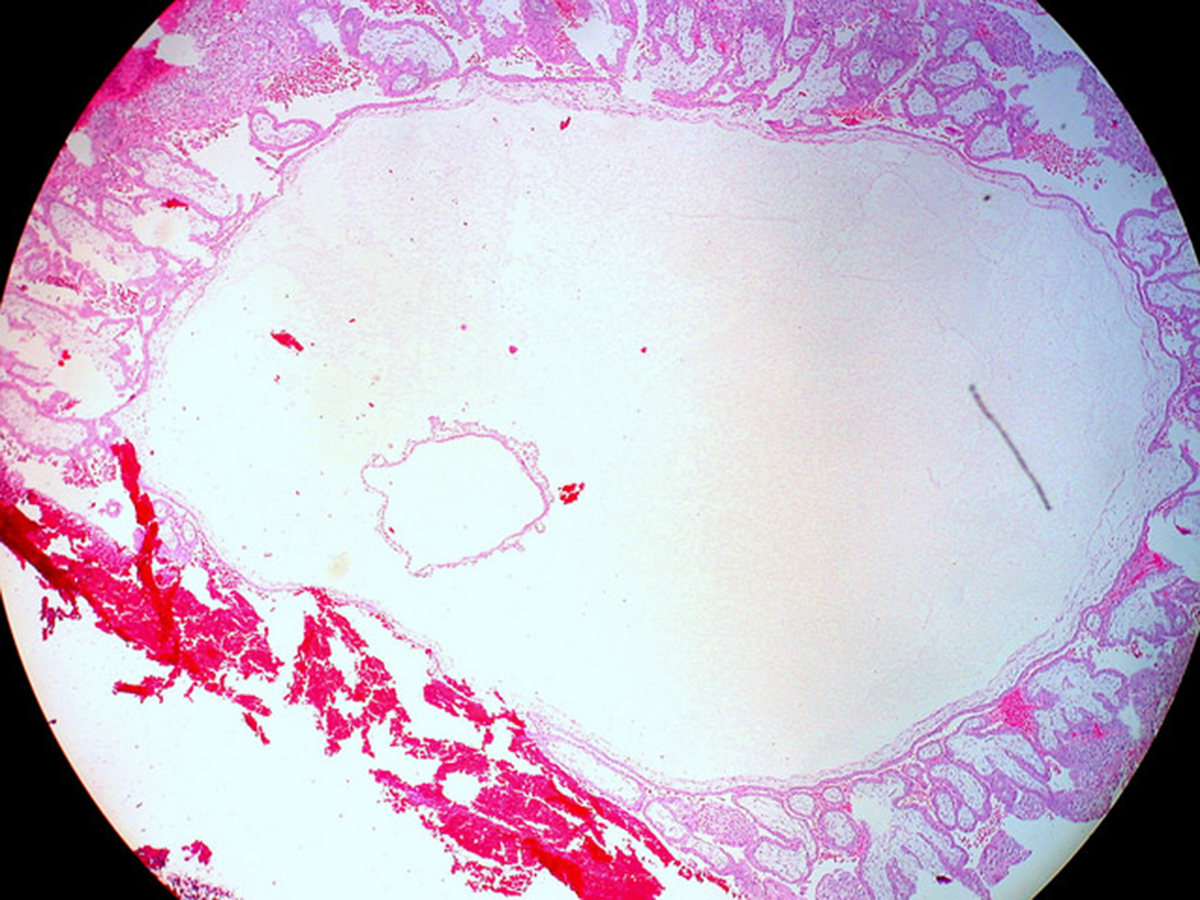
Neither Emma nor Ann Marie neatly fit into these statistics, which doctors are all too familiar with. Was Emma's ectopic pregnancy initially missed solely because of her history of miscarriage combined with a failure to look at the ovarian region during ultrasounds? Almost certainly.
Symptoms Of Ectopic Pregnancy
Yes, they were already mentioned in this article — abdominal pain, often one-sided, nausea and vomiting, pain in the shoulders, neck and rectum, bleeding, dizziness, light-headedness, and a feeling of general weakness are all symptoms of ectopic pregnancy. Those symptoms do not represent the full story, however. Another key symptom is rising levels of the pregnancy hormone hCG, even after a suspected miscarriage and after an ultrasound revealed an empty uterus. Continued pregnancy symptoms following a suspected miscarriage are another symptom. If the ectopic pregnancy was located in a fallopian tube and the tube ruptures, pain severe enough to cause fainting is another symptom. Finally, an ultrasound location of the ectopic pregnancy can offer a definite diagnosis.
READ Ectopic Pregnancy: Beyond The Fallopian Tubes
The Role You Can Play In Your Diagnosis
Emma came to the conclusion that ectopic pregnancy was a likely possibility because of that very phenomenon many doctors disdain — because of "Dr Google" — combined with the experience she already had with miscarriage, and her ability to recognize that this time was different. She received an accurate diagnosis in a fairly timely manner because she trusted her gut instinct and kept on reaching out to her healthcare providers, who initially, based on the knowledge they had, failed to look at the possibility of ectopic pregnancy.
Though doctors hold the key to medical knowledge, we ourselves experience the symptoms going on in our own bodies. Ectopic pregnancies can quickly become life-threatening, and as such we shouldn't underestimate the power we have to contribute to the right diagnosis.
- Photo courtesy of jollofandmalt: www.flickr.com/photos/119697633@N05/12998101554/
- Photo courtesy of jollofandmalt: www.flickr.com/photos/119697633@N05/12998101554/
- Photo courtesy by euthman: www.flickr.com/photos/euthman/304334264/
- Photo courtesy of euthman: www.flickr.com/photos/euthman/304334264/