SteadyHealth.com - Health Topics Forum Index
  Find a Doctor   Ask Experts      Articles      Encyclopedia   Blogs   Tickers    Search  Register    FAQ    Log in 

May 17, 2006

Habit disorders: How to prevent and treat nail biting

by SirGan

SteadyHealth.com - Health Topics Forum Index -> Articles archive

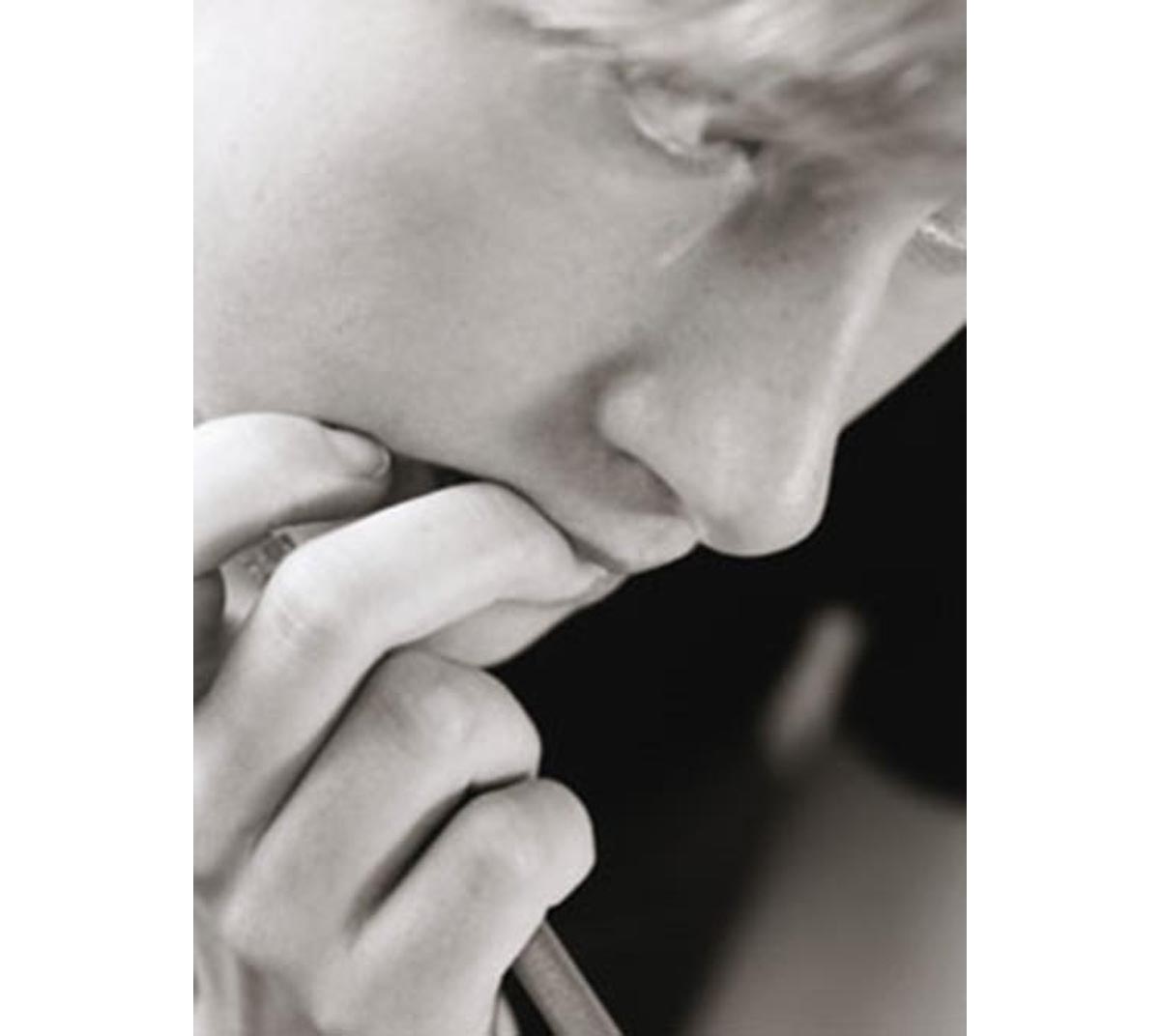
Nail biting is one very common habit that affects mostly kids but it can happen to adults and older people! It is about biting one's fingernails or toenails during periods of nervousness, stress or boredom. It can also be a sign of mental or emotional disorder, but is commonly seen in intellectuals. The medical term for nail biting is chronic onychophagia. It belongs to the group of disorders called Stereotypic movement disorders. Often starting in childhood, nail biting can persist in some adults and become an irritating and unsightly nuisance. Some nail biters experience the habit with such severity that their nails are constantly bitten down to the maximum and bleeding, causing pain and often embarrassment.

Incidence

Several studies have shown that approximately 28% to 33% of children ages 7-10 years old are biting their nails, as well as the 44% of adolescents, 19% to 29% of young adults and 5% of older adults. It is usually more common in boys. Stereotypic movements are common in infants and toddlers. Some estimates suggest that 15–20 percent of children under age three exhibit some kind of rhythmic, repetitive movements.

What is stereotypic movement disorder?

Stereotypic movements are described as a special psychiatric symptom, since they have symptoms of both psychotic and neurological disorders. They may also arise from unexplained causes. These movements may include:
  • head banging
  • nail biting
  • playing with hair  
  • thumb sucking
  • hand flapping
  • nose picking
  • whirling
  • body rocking
  • picking at the body
  • self-biting
  • object biting
  • self-hitting
  • compulsive scratching
  • eye gouging
  • teeth grinding (bruxism)
  • breath holding
  • stereotyped sound production
The exact definition is that this disorder is about repetitive movements that cause physical harm or severely interfere with normal activities. Although, many think that it happens only to kids, this isn't true at all! Stereotypic movements occur in people of any age, including the very young, but they are most prevalent in adolescence.
People may experience only one particular stereotyped movement or even several of them. The exact mechanisms and triggers are still unknown, but they seem to increase with boredom, tension, or frustration, and it appears that the movements are self-stimulatory and sometimes pleasurable.

Habits

Similar to stereotypic movements, a habit is a learned behavior that a person repeats so often that he or she begins to do it without even thinking about it. Although many people don’t think a lot about this, the fact is that certain habits can be helpful, and some may seem to serve no particular purpose!
  • Helpful habits- brushing teeth before going to bed or buckling your seatbelt when getting into a car.
  • Habits with no purpose - hair twirling, thumb sucking, nail biting… etc.
Some habits are annoying, and some can cause distress or become the focus of teasing. Still others may have harmful effects. For example, thumb sucking, which can go on for years, can cause dental problems.

Are there a thing called ’’Physiological habit’’ ?

Some habit-like behavior is normal for a developing child. For example, approximately one half of all 2-year-old children engage in thumb sucking. However, if this behavior persists through childhood, the likelihood of it becoming a substantial problem may increase with age.

Possible cause of nail biting

Like any other stereotypic movement, nail biting can be caused by:
  • sensory deprivation (blindness or deafness)
  • drug use (cocaine, amphetamines)
  • brain disease (seizures, infection)
  • major psychiatric disorders (anxiety disorder, obsessive-compulsive disorder, autism)
  • mental retardation
Nail biting is, according to Freudian theory, a symptom of oral fixation.
It is very important to know that, although many situations can give rise to stereotypic movements, the root cause of stereotypic movement disorder is unknown. Different theories propose that the causes are:
  • behavioral
  • neurological
  • genetic
Although there are many theories to account for this disorder, no hard evidence clearly supports one line of reasoning or specific cause.

Symptoms of nail biting

The fact is that most childhood habits are benign and have no specific observable physical signs. However, when physical signs are present, they are typically non-pathologic and often previously unnoticed. It is proven that nail biting can be associated with next symptoms:
  • extremely short fingernails
  • paronychia
  • oral herpes
  • herpetic whitlow
  • damaged dentition
  • apical root resorption
  • fractures to the incisors
  • Gingivitis.
Nail biting can worsen some existing conditions of the nail bed, such as:
  • Infection of the skin around the nail (paronychia)
  • Warts around the nail bed

Negative side-effects of nail biting

Biting the nails can result in the transportation of microorganisms that are hidden under the surface of the nail into the mouth. This could lead to some very serious infections of the gums and lips! In fact, over 100 bacterial skin infections in 2000 were traced to footbaths in nail salons. It is proven that many pathogens have the ability to live and multiply inside of a nail, and still cause no significant symptoms. Nail biting also has the negative side effect of restraining the use of the hands. Although, they are afraid to admit- but the fact is that- a compulsive nail-biter can be restricted in their ability to work because their hand is in their mouth. These jobs include writing, typing, drawing; driving and other…It can cause not only damages of the nails but the teeth also. It can cause serious damages to the substantia adamantinea of the front teeth, promoting caries in these areas.

Treatment of nail biting

Most common habits in children that require treatment can be significantly improved with behavioral interventions, without the use of medications. However, in some cases, medications in addition to behavioral treatments may be required to attain optimal treatment outcomes.
  • Medications
The fact is that some of those nasty habits such as nail biting have been shown to respond well to certain types of medication. The medications used to treat the problem include the newest, most potent anti-depressants. These medications include
  • Clomipramine
  • Fluoxetine
  • Sertraline
  • Paroxetine
  • Fluvoxamine
  • Citalopram
  • Escitalopram
  • Nefazodone
  • Venlafaxine.
anti-psychotics medications that are also being used are:
  • Risperidone
  • Olazapine
  • Quetiapine
  • Ziprasidone
  • Aripiprazole.

Behavioral Therapy

Beside the fact that most experts believe that behavioral therapy couldn’t be that much helpful, some patients have found behavioral therapy to be beneficial on its own or as a complement to medication.
The first part of nail biting therapy consists of
  1. Habit Reversal Training (HRT)
    It is one four-step process which teaches you awareness of your habits, how to relax, how to breathe and center yourself, and to perform a competing and opposing muscle response. It teaches you to possibly replace the nail biting habit with a more constructive habit.

  2. Stimulus control (SC)
    SC is a behavioral treatment that seeks to help sufferers first identify, and then eliminate, avoid, or change the particular activities, environmental factors, mood states, or circumstances that have become associated with, and that trigger picking or pulling. The goal of the part of the therapy is to consciously control these triggers that lead to the undesirable behaviors, and to create new learned connections between the urges new non-destructive behaviors.

Hypnotherapy

Hypnotherapy can help you to form positive new alternatives to nail biting, to help you cope with anxious situations and stress triggers in a constructive way.
A hypnotherapist can also work with your unconscious mind to stop this unconscious habit.

Other Treatment

Various forms of aversion therapy exist to help people stop biting their nails. These include:
  • Coating the nails with a bad-tasting substance (sometimes in the form of a special nail polish)
  • Wearing a rubber band on their wrist
  • Having friends and family members snap it when they see nail biting.
  • Keeping a record of when one bites may also be helpful in finding the root of the problem.
  • Orthodontic treatment - Some nail biters who undergo this kind of treatment find that wearing a bite plate makes it impossible for them to bite their nails with their teeth.
There is only one but big problem- some compulsive nail-biters, however, find the effectiveness of all of these remedies to be poor. Like other nervous habits, nail biting is sometimes a symptom of an emotional problem. In these cases, resolving the underlying problem can help to lessen or eliminate the nail-biting habit.

Tips for parents

  • Keep his hands occupied.
  • Cut his fingernails short so there's nothing to tempt him to bite.
  • Wait and hope
  • Check it out with some health specialist
Nail biting is a common habit. Although unsanitary, it typically causes no long-term nail problems. The fact is that most of the childhood habits that do not involve self-injury are benign and disappear without any special intervention. When a habit persists and interferes with daily functioning, intervention is warranted.
The prognosis for reducing and eliminating habit disorders is typically good.
Treatment research shows that behavioral intervention can reduce the habit behavior by 90%.
COMMENTS
Readers posted 0 comments for this article
View comments
Write your comment
ARTICLE RATING


[ 11 voters ]

Rate this article:

bad
average
good
very good
excellent

RELATED ARTICLES
SYNDICATE FEED


    Article sources
    • www.wikipedia.com
    • www.emedicine.com