

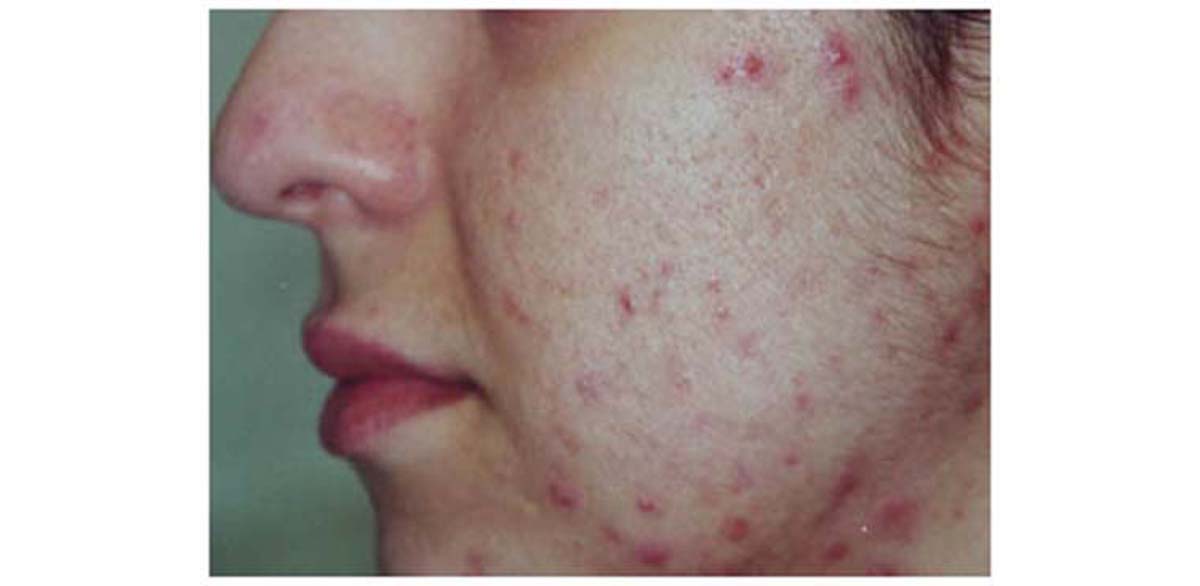
Many experts are saying that there is also a connection between the food we eat and a possible acne breakthrough. However, the latest researches are indicating that, contrary to what some people think, foods have little effect on acne.
Symptoms
Spots associated with acne are actually forming in the glands of the skin that produce protective oils. These glands are called sebaceous glands. The places where the spots usually occur are the face, shoulders, and upper back.
Oil secretions build up beneath the blocked pore, providing a perfect environment for the skin bacteria.
Acne may result in:
* Small spots known as "blackheads" (or open comedones).
* Small spots which are white in color, known as "whiteheads" (or closed comedones). These may become infected by a germ or bacterium (Propionibacterium acnes) which makes the spot inflamed, and results in a larger raised spot (papule), a spot filled with pus (pustule) or a hardened lump (nodule). The largest spots are more likely to leave lasting scars.
* Pimples. These are raised, reddish spots that signal inflammation or infection in the hair follicles.
* Cysts. These are thick lumps beneath the surface of the skin, which are formed by the buildup of secretions deep within hair follicles.
Acne can sometimes be confused with these conditions:
- Rosacea
- Folliculitis
- Dermatitis
The biggest problem, besides the possible scarring, is that acne have serious psychological effects, such as reduced self-esteem and depression. Acne usually appears during adolescence, when people already tend to be socially insecure. Anyway, acne is rarely a serious medical condition.
Incidence by age groups
Four out of five people between the ages of 12 and 24 develop acne at least once during this period. Acne is an extremely common skin condition with a prevalence of 80% in female and 90% in male teenagers. While the disorder is often associated with teenagers, it can affect people of all ages. It's not uncommon for acne to occur in people in their 20s and 30s. And, some people continue to have acne in their 40s and 50s.
Possible causes of acne
The exact cause of acne is not completely understood. The problem definitely lies with the sebaceous glands. These glands secrete an oily substance known as sebum in order to lubricate your hair and skin. It's not known what triggers the increased production of sebum that leads to acne, but a number of factors including hormones, bacteria, certain medications and heredity definitely play a role. Some experts are saying that it may also be a hereditary condition. Still, there are some factors which are known to be linked to acne. Some of these factors are:
- Hormonal activity, such as menstrual cycles and puberty
- Stress, through increased output of hormones from the adrenal (stress) glands.
- Hyperactive sebaceous glands, secondary to the three hormone sources above.
- Accumulation of dead skin cells.
- Bacteria in the pores, to which the body becomes 'allergic'.
- Skin irritation or scratching of any sort will activate the inflammation.
- Use of anabolic steroids.
- Any medication containing Halogens (iodides, chlorides, bromides), lithium, barbiturates, or androgens.
- Exposure to high levels of chlorine compounds, particularly chlorinated dioxins, can cause severe, long-lasting acne known as Chlor-acne.
In the last couple of years, the researchers have given most of their attention to the theory of the hormone-induced acne. This is because it is proven that many processes that concern follicles and skin are driven by hormones. Some of those processes are:
- abnormal shedding of the cells lining the follicle,
- abnormal cell binding within the follicle,
- water retention in the skin
There are several hormones that have been linked to acne:
- the male hormone testosterone,
- dihydrotestosterone (DHT) and
- dehydroepiandrosterone sulfate (DHEAS),
- insulin-like growth factor 1 (IGF-I).
Tumors in the adrenal glands, polycystic ovarian syndrome (especially when adult acne occurs with irregular menstrual periods), and other health conditions can cause acne.
Risk factors for developing acne
Since it is proven that hormonal changes in the body can provoke or aggravate acne, every condition that causes such changes is a possible risk factor. Some of those changes are common among:
- Teenagers, both boys and girls
- Women and girls, two to seven days before their periods
- Pregnant women
- People using certain prescription medications, such as birth control pills, steroids, and lithium.
- People that are overweight because the increased insulin production can signal the body to release extra male hormones, called androgens, which are involved in pimple formation
Other risk factors include:
- Exposing your skin directly to greasy or oily substances, or to certain cosmetics.
- Having a family history of acne. If your parents had acne, you may be likely to develop it too.
- Friction or pressure on your skin caused by items such as telephones or cell phones, helmets, tight collars and backpacks.
- Poor diet: excessive sugar, trans fats, fried, salt, and processed foods. Insufficient intake of water, healthy oils, fruit and vegetables, and fiber.
- Stress can make acne worse by releasing certain hormones.
Food and acne
There are many myths or common misconceptions about what causes acne. Among these are a poor hygiene or a bad diet of chocolates and sweets.
Neither dirt nor diet actually cause acne.
In general, experts believe today that dietary products have a very small influence on acne. Several tecent studies have proven that chocolate, caffeine, sugar, oil, milk, seafood, or fats are not statistically related to acne incidence, contrary to what many people believe.
There may be some individual differences and some foods can inflame the acne lesions in certain people.
It’s not that any food item directly triggers an outbreak of acne, but the chemical decomposition of certain food in the digestive system increases the amount of such elements which help in acne proliferation. Some of those substances are:
- saturated fat in animal products
- the hydrogenated fat in processed food,
- refined sugar,
- coffee,
- alcohol etc.
All these ingredients are producing some bio-chemical toxins, which, after the decomposition in the GI tract, are being released through the skin pores causing or inflaming acne.
Not only the food itself, but the improper digestion too helps acne to increase.
The cause of this is believed to be too little hydrochloric acid in the stomach. In such conditions, the body is unable to absorb important nutrients. This of course results in a weak immune system that cannot fight the bacteria effectively.
The poor digestive system should be restored with the help of the right kind of food and digestive supplements. Some medications may also be very helpful.
It still isn't clear if the food is causing acne but it is certain that it can help relieve its symptoms. Eating a healthy diet and drinking plenty of water along with getting regular exercise will improve how you feel and how your skin looks, but we need to keep in mind that acne is a result of overly excited sebaceous glands.
Treatment of acne
There is no known cure for acne but it can be controlled. Most acne medicines take several weeks to work. The best results happen after taking acne medicine for three months. The goals of acne therapy is to:
- reduce oil production,
- speedup skin cell turnover,
- fight bacterial infection
Topical treatments
Acne lotions may dry up the oil, kill bacteria and promote sloughing of dead skin cells.
Some of the most commonly used ingredients in them are benzoyl peroxide, sulfur, resorcinol, salicylic acid etc. These products can be helpful for very mild acne. There are also some much stronger therapy choices. Some of the most common are
- Tretinoin (Avita, Retin-A, Renova) and
- Adapalene (Differin)
These are examples of topical prescription products derived from vitamin A. They work by promoting cell turnover and preventing plugging of the hair follicle.
Antibiotics
Oral antibiotics may be very helpful in moderate to severe adult acne treatment. They should reduce bacteria and fight the inflammation. They are very often used in combination with topical products.
Isotretinoin
Isotretinoin is a very powerful medication available for treating the scarring cystic acne or acne that doesn't respond to other treatments. It's very effective, but people who take it need close monitoring by a dermatologist because of the possibility of severe side effects. It is contraindicated in pregnancy.
Oral contraceptives
Oral contraceptives, including a combination of norgestimate and ethinyl estradiol (Ortho-Cyclen, Ortho Tri-Cyclen), have shown to improve acne in women. However, oral contraceptives may cause other side effects mostly due to hormonal disbalance.
Read More: Acne and Carbs: Insulin Resistance Links Obesity and Acne, Study Shows
Herbal supplements
A herbal blend that can help with acne consists of equal parts of the herbal extracts of sarsaparilla, yellow dock, burdock, and cleavers. These herbs are believed to be potent blood and lymph cleansers. Half a teaspoon per day of this blend should be taken three times per day combined with a healthy diet.
Vitamins and minerals
- Vitamin A, which may help reduce the sebum production.
- Zinc, especially in the form of zinc gluconate or zinc sulfate can also help prevent acne.
- Vitamin B6 may help premenstrual or mid-cycle acne.
- en.wikipedia.org/wiki/Acne
- www.acne-resource.org
- www.altmedicine.about.com